🌟 Turning Reactivity into Proactivity for Childcare Educators
In childcare, unexpected challenges are part of everyday life — but constantly reacting can leave educators drained and compliance overlooked. This blog explores the cycle of reactive decision‑making, why it creates stress, and how shifting to a proactive mindset can transform outcomes. With practical strategies, reflective practice, and celebrating preparedness when it pays off, educators can move from firefighting to confidence, embedding NQF Area 2 compliance into daily routines while strengthening health and safety for children.
Lindsay Smith
12/5/20253 min read
🌟 Turning Reactivity into Proactivity for Childcare Educators
In the fast‑paced world of childcare, educators are constantly juggling competing demands: children’s needs, compliance requirements, parent expectations, and unexpected challenges that arise daily. It’s no wonder that many decisions end up being reactive — made in the moment, under pressure, and often without the space to consider long‑term outcomes.
But what if we could shift from a cycle of reactivity to one of proactivity? This shift doesn’t mean controlling every situation (because in childcare, that’s impossible). Instead, it means building systems, habits, and mindsets that allow educators to respond with confidence rather than scramble under stress.
🔄 The Cycle of Reactive Decision‑Making
Reactive decision‑making often looks like this:
A problem arises suddenly (spill, illness, compliance check).
Educators rush to fix it in the moment.
The solution is short‑term, often a “band‑aid” fix.
Another issue arises, and the cycle repeats.
The issue with reactivity:
It drains energy and morale.
It creates inconsistency in routines.
It can lead to compliance gaps because decisions are rushed.
It leaves educators feeling like they’re always “putting out fires.”
🔄 The Cycle of Proactive Decision‑Making
Proactivity flips the script:
Anticipate common challenges before they happen.
Put systems and routines in place to reduce risk.
Train staff to respond consistently and confidently.
Review outcomes regularly to refine processes.
The benefits of proactivity:
Less stress and more confidence for educators.
Stronger compliance alignment (especially with NQF Area 2).
Improved health and safety outcomes for children.
A culture of calm, consistency, and professionalism.
🌟 How to Be Proactive When Situations Are Out of Your Control
Childcare is unpredictable — children get sick, accidents happen, parents arrive late. So how can educators stay proactive when the unexpected is constant?
Here are practical strategies:
Build Predictable Routines
When daily tasks are structured, educators have more bandwidth to handle surprises.
Scenario Planning
Think ahead: “If X happens, what’s our plan?” This reduces panic when the unexpected occurs.
Compliance as a Foundation
Use NQF Area 2 standards as a proactive framework. When compliance is embedded, responses are consistent and defensible.
Communication Protocols
Agree on how staff will communicate during disruptions. Clear roles prevent confusion.
Reflective Practice
After a reactive moment, pause and ask: “How could we prevent this next time?” Reflection turns reactivity into future proactivity.
Self‑Care and Team Support
Proactivity isn’t just about systems — it’s about people. Educators who feel supported and valued are more resilient when challenges arise.
✨ Final Thought
Reactivity will always be part of childcare — it’s the nature of working with children. But when educators shift their mindset and systems toward proactivity, the cycle changes. Instead of constantly firefighting, they build a culture of preparedness, confidence, and compliance.
Proactivity doesn’t eliminate challenges, but it transforms how educators meet them: with calm, clarity, and purpose.
🎉 Recognising When Preparedness Pays Off
One of the most powerful ways to build a proactive mindset in childcare centres is to notice and celebrate the small wins.
Why it matters:
When staff see that their preparation prevented a disruption or made a situation smoother, it reinforces the value of being proactive.
Recognition builds confidence and encourages educators to keep thinking ahead.
Celebrating even small examples — like having spare cleaning supplies ready or a clear plan for a sick child — keeps the focus on proactive habits.
How to do it:
Call it out in the moment: Acknowledge when a staff member’s preparation made a difference.
Share stories in team meetings: Highlight examples of proactive actions that saved time or reduced stress.
Reward consistency: Simple gestures like a thank‑you, a shout‑out, or a small token of appreciation can go a long way.
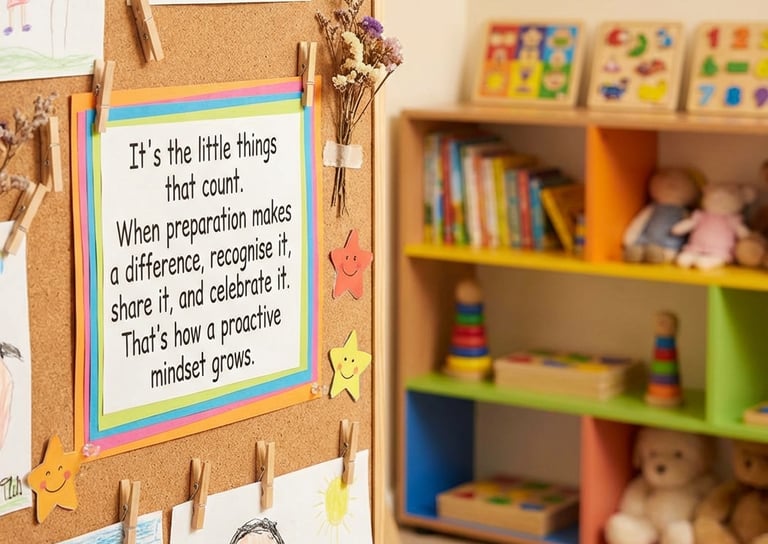
Make it visible: Create a “Proactivity Wall” or digital board where staff can post examples of preparedness paying off.
The ripple effect:
Staff feel valued and motivated.
Proactive behaviours become contagious.
The centre develops a culture where preparedness is the norm, not the exception.
✨ By focusing on and rewarding staff when their preparedness pays off, you’re not just recognising good practice — you’re embedding proactivity into the DNA of the centre.
here are several short “celebration phrases” or slogans you could use as badges, posters, or quick shout‑outs when staff demonstrate proactive wins. These keep the focus on recognising preparedness and building a proactive culture:
🎉 Celebration Phrases for Staff
“Preparedness in Action!”
“Proactivity Pays Off!”
“Small Steps, Big Impact.”
“Ready Before It Happens.”
“Confidence Through Preparation.”
“Proactive = Professional.”
“Prepared and Proud.”
“Celebrating the Little Wins.”
“Preparedness is Power.”
“Proactivity Creates Calm.”
🌟 How You Could Use Them
Badges or stickers for staff who demonstrate proactive wins.
Posters or digital boards in staff rooms to highlight examples.
Shout‑outs in team meetings: “Today we saw Preparedness in Action! when…”
Training slides to reinforce the mindset shift.
✨ These short, catchy phrases make recognition visible and memorable — turning everyday preparedness into something worth celebrating.
Contact
Lindsay Smith
BLB Penrith's trusted childcare cleaning Partner
info@blbcleaningservices.net
Phone
0432 355 396
© 2025. All rights reserved.